Tuesday, January 25, 2011

Home Cooking in Bayfield


Undaunted by the mercury, which stood at 12 below zero, we set off Friday morning for a weekend of Nordic skiing in Bayfield, Wisconsin.

There are countless ways to get there from Minneapolis—for a start, you can turn east from the freeway at Forest Lake, Highway 70, Hinkley, Askov, or Duluth. We hit the secondary roads at Hinkley, which sent us past St. Croix State Park and the HomeStyle Café in Danbury, Wisconsin. We didn’t stop: I think I might still be digesting the chicken-fried steak I enjoyed there in September. But it’s an unusual place, the owner cooks all the food himself, with the help of a woman from Montana.

(Native American, or Greek American?) who also waits the tables. Portions are on the gargantuan side.

We continued east to Minong before turning north toward Superior. Our immediate destination was the After Hours ski trails just west of the town of Brule.

We’d never been there before. Some parts of the gently rolling landscape have the feel of a tree farm, with vast acreage given to aspen, followed abruptly by seeming endless acres of tightly spaced, middle-aged white pine. But the plantings look like a forest all the same, rather than a regimented crop, and the sections of the trail that follow the heights above the Brule River are especially nice. We saw no one on the trail—the temperature had arrived at zero—and there were no critters in sight, either, though I at one point I spotted the tracks of a long-tailed weasel. Our two hours in the woods were given added dimension by the fact that more than a century ago, Hilary’s great-grandfather spent a winter logging in the woods near here before continuing west to Crookston.

We arrived in Bayfield at dusk and checked in at the Sea Gull Bay Motel, where you can rent an entire three-bedroom house for $70 a night. We took a sauna, whipped up some spaghetti, opened a bottle of fairly decent Cote du Rhone, played three games of scrabble and called it a night.

The next morning before dawn we watched through the living room window as some distant figures set up ice houses on Chequamegon Bay a quarter-mile out from shore. I made a few calls and discovered that the ice road over to Madeleine Island wasn’t open yet, and that you can’t get to the sea caves on the north side of the peninsula either. We drove downtown to the ferry dock, where a windsled operates a regular schedule of deliveries to the island. The sled was no where to be seen, but pine trees had been set out on the ice to mark the road, and while we were looking out on the vast sheet of ice stretching out toward Basswood and Madeleine islands, a couple of snowmobiles emerged from the white horizon and eventually passed us on their way to the snow-covered beach.

Our next stop was Bodin’s fresh fish market, a few blocks away on the south side of town. Evidently they’re still fishing with nets under the ice.

“We had some great herring fishing in October,” the man in the back room told us. “We brought in 250,000 pounds in two weeks. We had six semis backed up to the dock, one after another. And one rabbi, who stood at the back of each truck blessing the fish as it was loaded.”

“They must be taking it to the gefelte fish factory in Iowa,” I mused.

“Yup, they were going to Iowa.”

We bought a fillet of lake trout and another of whitefish, though it hadn’t been a part of our menu. Having done so, we then headed back downtown for some fish batter, parsley, butter, and a lemon. The Fryin’ Magic seasoned coating mix (made by Little Crow Foods of Warsaw, Indiana) was on sale.

An cheerful Indian woman was working the cash register. A young man from the Red Cliff tribal police was just in front of us in line. Another Ojibwe man was just leaving with a bag of plastic flowers (of all things). Before stepping outside he said, “See you at Kino,” and the woman replied in a musical voice, as if in agreement, “I'll be in the back row.” Then a woman buying a few things at the other register said, “See you at church.” It wasn’t clear to me to whom that remark was addressed, but no one responded.

A half-hour later we were setting out on the Jerry Jay Jolly Pike Creek Ski trails up in the hills west of town. No one in the parking lot. We were overtaken a quarter-mile in by a beautiful white husky wearing a day-glow orange cape, followed a few minute later by his owner. “I should have him on a leash, I know,” the man said, “But if I did, I’d probably strangle him or run him over on this hill we’re coming to. It’s not for the faint of heart.”

The hill in question was, indeed, one of those winding chutes down through the woods that have been removed from most well-designed trial systems. The kind that drop away out of sight in front of you while making a corner at the same time. The kind that you arrive at the bottom of with relief, not exhilaration. Hilary went first. When I spotted her tiny red figure a few minutes later amid the trees in the valley below, I started my own hair-raising descent.

Regaining my bearings at last, I found myself on the bank of Pike Creek, surrounded on all sides by snow-covered pines rising up the steep walls of the valley. The creek was flowing dark through the bed of snow-covered rocks. It was an enchanting stretch—winter at its best.

We spent the afternoon reading and snoozing, with the snow growing thicker and the distant outline of Madeleine Island eventually disappearing from view. The fishermen had disassembled their huts—they were gone. We drove down to the landing just to get out into the day one more time before darkness fell and were lucky enough to arrive a few minutes before the windsled was due on a return trip from the island. People were backing their cars out onto the ice, their trunks loaded with groceries. A man in a Green Bay Packers hat was standing on shore with what looked like three pizza delivery bags.

“So you live on the island?” I asked him.

“I’m fourth generation on the island,” he replied. “My cousin drives the windsled. Where are you from?”

“We’re from Minneapolis. Just up for some cross-country skiing.”

“Well, we’ve got plenty of snow for that. Trouble is, the snow screws up the ice on the lake. Insulates it. It started out real good but now it’s gone funny.”

We talked about the upcoming game between the Packers and Bears for a minute or two before the headlights on the windsled appeared through the wall of snow in the distance.

It’s quite a machine—orange, ensconced in canvas, riding on five huge runners, driven by wind generated by two enormous propellers at the back. It’s not likely to get stuck in slush, because it doesn’t require traction, and it won’t fall through the ice entirely, because the thing floats!

Meanwhile, I saw a man pass in a snowmobile on his way to the island clutching two plastic IGA grocery bags. (Honey, could you make a run to town to get some coffee?) And two people drove in from somewhere out on the ice on an ATV, caked in snow.

I spoke to them a few minutes later, as they were scraping ice off the underside of their vehicle. It looked to be a father-daughter team. They were from Ashland, and they’d been ice-fishing all day out near Basswood Island. Didn’t catch a thing. Other fishermen nearby had brought in thirty whitefish and gave them five or six. I told the man we’d bought some fresh trout at Bodin’s that we were going to fry up for supper.

“Fish soup. That’s really good. Or bake them. Just put some olive oil and lemon, maybe some onions…”

“In tin foil,” his daughter added an important detail, looking up from the underside of the machine.

“But frying’s good, too,” he said at last, tactfully. "We like fried fish, too."

Friday, January 21, 2011

True Grit


The Western genre has been dying a slow death since the early 1960s—or so we’re told. But genres are categories, not organisms. They can’t die. For that matter, most of the Westerns made during the 1950s are second-rate. In fact, most Westerns are second-rate, period, maybe because didactic violence and wide-open landscapes are hard to hold together on the big screen.

The string of very good “modern” Westerns is long and fairly impressive. It runs from High Noon (a take on the McCarthy witch-hunt?) and Rio Bravo ( Howard Hawks’ masterful remake of High Noon) to the Wild Bunch, Little Big Man, Butch Cassidy and the Sundance Kid, Missouri Breaks (the quintessential “method” Western), and Heaven’s Gate (not as bad as they say…or so they say) and on up to Days of Heaven, Dances with Wolves, Unforgiven, Open Range, and the remake of 3:10 to Yuma. And that’s not to mention the numerous campy contributions of Sergio Leone to the genre, many of then shot in Spain, which culminated in Once Upon a Time in the West.

Now the Coen brothers have entered the field with a remake of True Grit. It follows a few days in the life of Mattie Ross, a fourteen-year-old girl who’s determined to avenge the murder of her father, and it’s a picaresque affair. Mattie holds her own in encounters with stable managers, Texas Rangers, U.S. Marshall Rooster Cogburn, and outlaws of various stripes. Everyone in the film speaks with a slightly bookish diction, though Cogburn (Jeff Bridges) tends to slur, growl, or grunt his lines, and the Ranger (Matt Damon) gives them a slightly affected lilt, in keeping with his somewhat dandified character.

There are touches of classic Coen-bros black humor here and there in the film—for example, during a public hanging the Native American convict isn’t given a fair chance to deliver his last words—but for the most part, it’s a lovely recreation of the Old West, and even though the man-hunt that occupies the second half of the film takes place in winter, the landscapes are wonderfully rendered (well, it is New Mexico) and the cabin scenes are far more deftly lit (hence less phony-looking) than is typical of the genre.


True Grit has been called the “least ironic” of the Coen Brothers’ films, which may explain why it’s been the most successful. It may eventually surpass Dances with Wolves to become the most popular Western of all time. Jeff Bridges is a genuine riot, finally earning his Oscar one year after the fact, and Hailee Steinfeld, a relative newcomer to film in the role of Mattie Ross, succeeds at being a charming kid notwithstanding her fierce determination to hunt down and punish her father’s killer. The hymn-laden soundtrack also contributes to the atmosphere, which is as richly “western” as anything you’ll see in Stagecoach or Shane.

Friday, January 14, 2011

Penelope Fitzgerald


Winter themes again: There’s something wonderful about sitting by the fire in the dead of night with a glass of port (or something) by your side and a book in your lap. I was making my way through The Book in the Renaissance by Andrew Pettegree (a title I saw on the New York Times Notable Books list and ordered on impulse from Amazon) but having reached page 49 I decided to give it a rest and turned to a slim volume of short stories by Penelope Fitzgerald called The Means of Escape.

Perfect choice. The stories are spare and strange; they’re set in places such as Brittany, Tasmania, and Turkey as well as in England proper. Though the descriptions are terse, they’re also vivid and the contours of any given plot depart from the norm almost immediately.

The arcane elements that often play a part in these stories reminded me of the work of the Austrian novelist Leo Perutz (By Night Under a Stone Bridge, Leonardo’s Judas) with their rich patina of history and their breezy pace, though Fitzgerald has no interest in probing the supernatural/metaphysical zone that Perutz finds so fascinating.

An escaped convict confronts a young woman practicing the organ in a church. A group of “plein-air” painters circa 1880 spend the summer in a poor seaside village, where models are hard to find. A program director for the BBC decides to save money on programming by hiring on a once-famous conductor who’s spent the last twenty years on a remote island off the Scottish coast. Such are a few of the premises from which Fitzgerald spins her tales, the full import of which almost invariably remains hidden until the last sentence—if it ever becomes clear at all.

In a recent New York Times review, Joyce Carol Oates divided short story writers into two groups: meticulous old-school masters (from Henry James to Alice Munro) and young practitioners of “first-person narration, or monologue: more akin to nonliterary sources like stand-up comedy, performance art, movies and rap music and blogs.” It seems to me these stories fall into neither category. Fitzgerald’s voice vanishes amid the details, perhaps because she never lingers in the midst of them. A fast reader could probably finish the eight stories in a hour or two.

Thursday, January 6, 2011

Soul Kitchen


The dark depths of winter—the soul needs this kind of retreat. Yes, I was thumbing through Vincent Descombes’s cheerfully scornful critique of Sartre’s empty-headed gloss on dialectic, and … but wait! It’s dark outside, and maybe dark inside, too. But isn’t the time exactly right for a film like Soul Kitchen?!

Maybe you haven’t heard of it. It’s a Turkish-German comedy by director Fatih Akin, better known for dramas like The Edge of Heaven (2007). Soul Kitchen has the same cross-cultural background—a young Greek named Zinos who’s trying to run a restaurant in an abandoned warehouse in Hamburg.

The plot elements are the stuff of cliché. Zino’s brother, recently paroled from prison, wants a job (or better yet, a wad of cash.) The chef was fired from his previous position because he wouldn’t heat up the gazpacho—it’s not traditional.

Zino’s gorgeous girlfriend, a journalist, is leaving for a primo assignment in Shanghai. He meets up, by chance, with an erstwhile high-school buddy, a total fascist Arian who really only wants to buy his building (please forgive the racial slur). Another buddy wants to use the building for band practice. Zino throws out his back moving an antediluvian automatic dishwasher (Greek) into the restaurant kitchen, and his now-remote girlfriend lines him up, via Skype, with a comely Asian masseuse.

Meanwhile, his most reliable waitress, a punk artist just trying to make ends meet, falls in love with his brother. Throw in a few health inspectors, income tax investigators, apartment fires, and wealthy aunts, and you have the material for several screwball comedies. And did I mention the Brazilian tree-bark aphrodisiac in the dessert?

Be forewarned that the “foodie” elements of Soul Kitchen wouldn’t carry the film on their own. And it doesn’t have the droll genius of an early Wenders film, or that manic humor that fuses a film into a totally exhilarating experience, the way that What Means Motley? (or His Girl Friday) does. But what it lacks in comic touch, Soul Kitchen makes up for with … music.


Rap, disco, reggae, bangra—in German, and Greek! Songs like “Soundhaudegen” by Silly Walks Movement, “Fragkosriani” by the Greek ska band Locomondo, followed by American stuff by Dyke and the Blazers and Zapp and Roger. Then we have Broke But Busy, Turtle Bay Country Club. I’d never heard of any of them. In fact, the only song on the soundtrack that I recognized was “The Creator Has a Master Plan” by Pharaoh Sanders. It’s a good piece, but, watching the credits after the film, I noticed it was misattributed to Louis Armstrong!

Happy January!

Tuesday, December 28, 2010

Ice Dams


Following a week of virtually non-stop food and festivity, I spent a good part of the day yesterday on a ladder chipping ice off the eaves to stop the flow of water into the house. There's something meditative about following the cleavages in the ice with a hammer and screwdriver, watching the chunks fly off through your yellow-tinted goggles, seeing how close you can get to the shingles without punching a hole in them. The little tap-tap-tap rings out through the neighborhood, while the incessant drip-drip-drip continues inside.

The ice itself has the look of white obsidian, wavy, smooth, and sheer. The task is seemingly endless, but it’s a thrill when you do hit an area where a puddle has collected; the ice is suddenly wet, it starts to come off easier, your deerskin choppers soon become soaked. Time to come in for another cup of coffee...

So much for global warming? Not really. It’s well documented that the earth’s frozen areas are in retreat, but there are exceptions. The seasonal snow cover has, in the past two decades, actually expanded across the high latitudes of the Northern Hemisphere, especially just north of the Himalayas, the Tien Shan, and the Altai in Central Asia. This pile of snow influences the atmosphere profoundly because it creates a large dome of cold air which the jet stream must bend around. A bigger pile of cold air generates a bigger bend. In response, the jet stream diverges more often, and more wildly, from its generally west to east path and begins to meander north and south, sending more warm air north from the tropics into Alaska and Greenland, and pushing cold air south from the Arctic on the east side of the Rockies across the interior of North America. Cold Siberian air, meanwhile, spills south into East Asia and southwestward toward Europe.

More snow, more ice dams. I’ve got the bamboo roof-rake out. There’s something poetic about scraping snow with bamboo, I guess. Yet the effort is half-hearted. It’s supposed to rain in a day or two…

Monday, December 20, 2010

Solstice Reflections


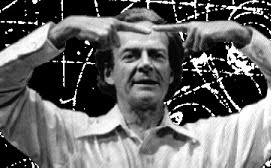
I came upon the following passage in a little book called The Meaning of It All, by the physicist Richard Feynman:

It is a great adventure to contemplate the universe, beyond man, to contemplate what it would be like without man, as it was in a great part of its long history and as it is in a great majority of places. When this objective view is finally attained, and the mystery and majesty of matter are fully appreciated, to then turn the objective eye back on man viewed as matter, to view life as part of this universal mystery of greatest depth, is to sense an experience which is very rare, and very exciting. It usually ends in laughter and a delight in the futility of trying to understand what this atom in the universe is, this thing-atoms with curiosity-that looks at itself and wonders why it wonders.

This is a simple and beautiful description, I think, of an experience many of us have had at one time or another. Feynman goes on to suggest that the mystery and awe he’s describing is so deep and impressive that conventional religious explanations—for example, that our presence here on earth has been arranged by God for his own glory, or so that he can watch the struggle between good and evil—are simply inadequate.

I would agree. Perhaps we could go further, and argue that such explanations are not merely inadequate, but misleading. The experience Feynman is describing is immediate, intuitive, and profound. Conventional religious explanations commonly posit an overload whom we seldom, if ever, meet, and have difficulty limning the contours of. This shadowy figure, quite unlike the intuition being described, tends to drag us down into a muddle in which exuberance and wonder compete with a sense of personal inadequacy and conscience. The laughter and delight diminish.

All the same, it seems to me that such notions of deity serve a purpose, and contain an element of truth. They reflect a reality that Feynman’s intuition doesn’t go quite far enough to include. For when we posit the inanimate universe from an “objective” point of view, following his advice, and then reverse our attention back to ourselves, we don’t see “man.” We see ourselves. More specifically, I see me. Unique, sentient, curious, mysterious, precious … and fraught with contingency.

This is the source of the frisson Feynman is describing. It’s important to remove the abstraction “man” from the equation, and it also might be just as well to remove the references to matter and atoms. Everything is made out of atoms, I guess. So what? The question is, How is it made? What is its structure? What makes it interesting, excellent, unique? Calling a sentient being “atoms” is like calling a soufflé “flour and eggs.”

A second element needs to be added to the experience, I think. For when we turn from the remarkable universe “out there” and refocus our attention on the no less remarkable “whatever-it is” in here, we find ourselves face to face not only with personal awareness, but also with our own drives and interests. After all, I don’t merely see and feel, I also scheme and plan. I have feelings, desires, and projects, all of which cavort in an unruly pen we sometimes refer to as the “ego.”

The negative connotations that haunt the word “ego” are nearly the opposite, perhaps, of those that can bring an element of unpleasantness to the word “God.” If we tend to see God as unduly portentous and dour, we too often see the ego as unduly crass and shallow. These effects, both of which are superficial, are also complimentary and to some extend intertwined. They work together to form the very common, yet wrongheaded, notion, that to enjoy oneself is evil, to give selflessly with obsequious deference to the Almighty is right and proper.

It seems to me there is a healthier and more fruitful way to set these elements against one another. A more complete inventory of the emotions associated with the “existential awareness” Feynman describes, might include not only wonder and delight, but also a vague sense of obligation to exert ourselves on behalf of the greater world in the midst of which we find ourselves. The two feelings don’t conflict. Rather, they support and fuel one another.

In another words, conscience is a natural result of self-awareness, and it becomes stronger yet when we begin to contemplate the beings who surround us on all sides, each of whom have different, but similarly unique, “windows” on the universe.

But conscience isn’t everything. The universe is fueled by exuberance and delight, self-aggrandizement and over-weaning pride, no less than by fellow-feeling. In any case, conscience itself is often governed to a large degree by personal affections and preferences, rather than by an indiscriminate urge to love our neighbors. For that matter, much of what we love about our family and friends has less to do with their selfless generosity than with their liveliness and complexity as people.

Such concepts are difficult to articulate, and I suppose I’ve made a hash of it here. The rituals and revelations of the world’s religions expose a variety of public responses, enshrined by tradition, exalted by art, and defiled by superstition and politics, to the same situation.

Less widely recognized, by of equal importance, I think, is the long tradition of rational inquiry into these same matters, of which Feyman’s refreshingly brief peroration is a classic example. The other day I hit upon another such effort when I took a look at Plato’s early dialogue Euthyphro. Though the dialogue ends inconclusively, as is typical of Plato’s early work, along the way Socrates asks two questions that are germane to the issues we’re discussing here. The first is designed to highlight the distinction between what can be measured and what can’t be measured. We’ll leave that critical distinction for another time. The second asks the question whether the gods love something because it’s good, or whether something is good because the gods love it.

Translated into religious terms, we might ask whether we’re being good when we do the things God tells us to, or whether the injunctions we’ve been given by religious authorities are designed to help us clarify and aid the natural bent of the human spirit toward what is right, good, and proper. Reduced to essentials, it’s a distinction between obedience and conscience.

But no sooner does the word “bent” appear than I’m reminded of Kant’s remark, “Out of the crooked timber of humanity no straight thing was ever made.” That’s a grim statement, and also an exaggeration, but it points to one aspect of the issue that I’ve been neglecting. Some people don’t seem to have much of a conscience. And even the best among us are often wracked by guilt when reflecting on things they might have done better, or perhaps should have done but never did at all. Besides, our actions are usually guided not only by what our conscience tells us is right, but by what other people expect, and the injunctions of religious doctrine, almost by definition, falls into the latter category.

When we examine the night sky, on the shortest day of the year, this is not, in all probability, the direction our thoughts will take. Something far simpler is likely to surface—white snow, jingling bells, wonder and delight, and a vague sense of gratitude, perhaps, that we’re actually standing here in the dark with a trillion miles of empty space in front of us, pretty much alive and well.

Wednesday, December 15, 2010

City Mouse and Country Mouse


The census figures are starting to roll in, and before long we’ll be awash in “analysis” the purpose of which is less to enlighten us than to “warn” us about how our society is crumbling in or way or another. The article in MinnPost today by Sharon Smickle is a classic case in point.

Analyzing the data, she finds a growing divide between urban and rural communities. The subhead reads: “The same lines that divide America are visible throughout the state. In pockets of rural Minnesota, people are far poorer, older and less educated than those who live in select Twin Cities suburbs and Rochester neighborhoods.”

But looking at the accompanying map, I don’t see any divide. The poor areas (dark green) shade into the moderately well-off areas in every direction. These chartreuse areas, in turn, shade into light green areas where people are quite well off. As we approach the very urban core, things grow somewhat darker again. Anyone asked to draw a line marking the “divide” Sharon is referring to would find it impossible to do so.

If we reduce the figures to their starkest and simplest state—like sliding the contrast bar in Photoshop all the way to the right—we’ll see a radical difference between urban and rural, black and white. But that effect is as patently artificial as a manipulated photograph. All it really tells us is that urban and rural demographics are different, as are urban and rural life. Is that news? I think I first read about such things in Aesops Fables, which appeared about 2,500 years ago.

The upshot of Sharon’s article is that urban folk, on average, are slightly younger, better educated, and make more money than small-town folk. (Most allegedly “rural” people live in small towns, and only 6% earn a living related to agriculture. An even smaller percentage actually “work” the land.) This is presumably because many small-town folk go to the city to get an education and never come back. Can we blame them for this? Then again, older people sometimes move to a cabin out-state when they retire, or back to their old home town, where the pace of life is gentler and health care costs may be more manageable, thus bringing the average age up and the average income down in that region.

Is there a crisis here? Is there a radical divide?

Meanwhile, what census statistics can’t track is the shadow economy that a growing number of young people seeking a simpler lifestyle move to small towns to enjoy.

The one interesting item Sharon mentions is that “rural” folk own more vehicles than urban folk. Always looking on the dark side of things, she attributes this to the lack of public transportation options out-state. But I’m not so sure we need to feel sorry for our country cousins, who have put up the “closed” sign on the body shop window and are out roaming the hills on their ATVs and snow machines, while we’re cooped up in suburban office towers planning desperately how to avoid the rush hour traffic.

In La Fontaine’s version of “The City Mouse and the Country Mouse,” the two rodents enjoy a fine dinner until the cat arrives to send them scurrying. The country mouse refuses a repeat invitation, remarking:

…It’s not that I’m critical of
the food. You served the best.

But at home I eat in peace,
And nobody interrupts.
Goodbye, then, and to hell
With pleasure that fear corrupts!